
The Employee-Centred Office: Scientific Evidence and Design Principles for a High-Performance Workplace
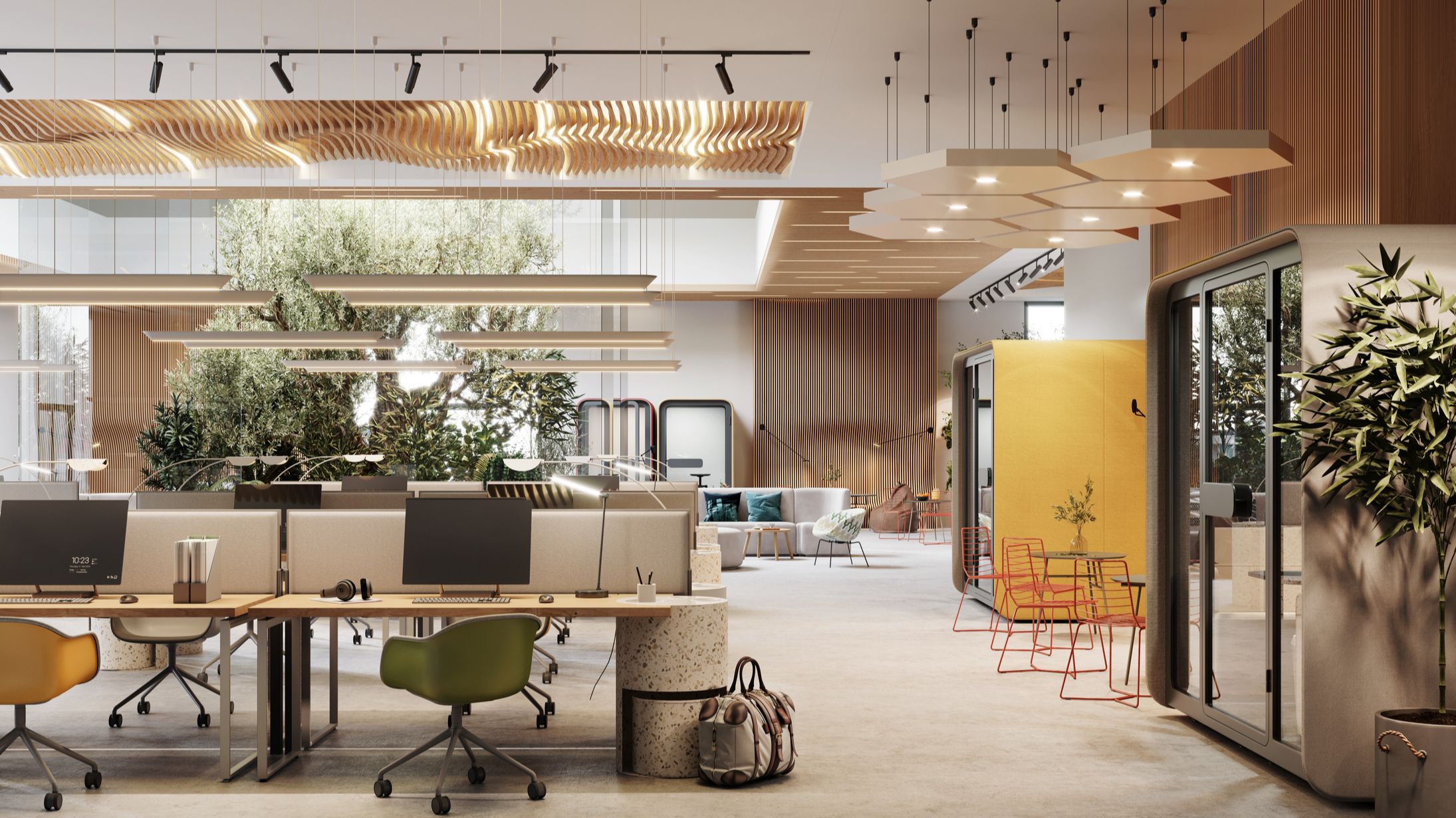
“A high-performance office is one that employees leave clearer, calmer, and capable of returning the next day at the same level.”
The modern office is no longer a default place to sit. From an employee perspective, it is a performance environment.
People come to the office to think clearly, collaborate effectively, make decisions, sustain energy across long workdays, and leave with enough physiological and cognitive capacity to recover and perform again tomorrow. When the environment undermines these outcomes, attendance becomes optional, engagement erodes, and performance quietly declines.
Increasingly, the scientific literature shows that this decline is biological, cumulative, and largely invisible to those experiencing it.
Controlled exposure studies demonstrate measurable decrements in decision-making as indoor carbon dioxide (CO₂) levels rise, even when occupants report little or no discomfort [1]. Longitudinal office-based studies link particulate matter (PM₂.₅) and ventilation proxies to slower response times, reduced accuracy, and impaired executive function [2]. Meta-analytic evidence now confirms that improvements in ventilation and indoor air quality are associated with statistically and practically meaningful gains in intellectual productivity across large working populations [3].
At this point, and often this early in the conversation, a predictable question emerges:
“What will this cost us?”
I’ll intentionally defer the full answer until later in the article.
But the reality is this: If the cost is perceived to exceed the return, employee well-being will not take priority. That is not cynicism, it is organisational economics.
The opportunity, and the mistake many organisations make, is assuming that environmental performance is a cost centre rather than a performance multiplier. The consequence is not immediate failure, but gradual inefficiency: slower thinking, higher fatigue, reduced resilience, and a workforce that quietly compensates for a system that is working against them.
There is a quiet irony at play. C-suite executives routinely invest substantial personal capital in sleep optimisation, recovery protocols, health monitoring, and performance coaching to safeguard clarity, energy, and decision quality. At the same time, the environments in which their organisations expect employees to think, focus, and perform are often treated as neutral backdrops rather than active biological inputs.
I've dealt with these people my entire career.
The outcomes executives seek individually are the same outcomes employees require collectively, yet they are rarely supported at scale.
This article explores what the evidence actually says, and why the question should not be “What does it cost?” but “What is the cost of not addressing it?”

Part I : Scientific Evidence Supporting an Employee-Centred Office
1. Air Quality > Cognitive Performance and Fatigue
What Employees Experience
Slower thinking, headaches, afternoon fatigue, and reduced concentration are commonly reported in office environments. These symptoms are frequently attributed to workload or personal factors, yet substantial evidence indicates environmental origins that remain largely unrecognised by occupants [1,4,5].
Scientific Evidence Base
Ventilation and Cognitive Performance
Controlled exposure and field studies have established a robust relationship between ventilation and cognitive performance. Allen et al. demonstrated that office workers exposed to higher ventilation rates and lower volatile organic compound (VOC) concentrations exhibited significantly higher cognitive function scores across multiple domains [6]. MacNaughton et al. further demonstrated that enhanced ventilation delivers economic, environmental, and health benefits, with improved performance across decision-making and information-processing tasks [7].
Meta-analytic evidence strengthens these findings. A 2023 meta-analysis pooling five studies (n = 3,679) found consistent associations between ventilation rate and intellectual productivity across arithmetic, verbal comprehension, and cognitive ability domains, supporting ventilation as a scalable performance intervention rather than a site-specific effect [3].
Carbon Dioxide as a Marker of Cognitive Load
Satish et al. isolated the direct effects of CO₂ on cognition by injecting ultrapure CO₂ while holding ventilation constant, demonstrating statistically significant decrements in complex decision-making at concentrations commonly observed in offices [1]. These effects were strongest for strategic thinking, information utilisation, and crisis response.
Field evidence provides practical thresholds. Gupta et al. found median cognitive test scores were up to 12% higher when CO₂ concentrations remained below 1,400 ppm in naturally ventilated offices and below 1,000 ppm in mechanically ventilated offices [8]. Longitudinal office studies further show that higher PM₂.₅ exposure and reduced ventilation (estimated via CO₂) are associated with slower response times and reduced accuracy on cognitive tasks over time [2].
Symptoms and Presenteeism
Mendell and Heath’s critical review demonstrated consistent associations between poor indoor environmental conditions and increased headaches, eye irritation, and airway symptoms [5]. Crucially, these symptoms were primarily linked to presenteeism rather than absenteeism, representing a substantial but often invisible productivity cost.
An economic synthesis shows that presenteeism costs frequently exceed absenteeism costs, in some cases by nearly twofold, suggesting that performance losses persist even when absence metrics appear stable [9].
Translation to Employee Outcome
Optimised air quality enables employees to think more clearly, sustain concentration for longer periods, and experience reduced cognitive drag during the workday. These effects represent measurable improvements in speed, accuracy, and executive function rather than subjective comfort alone [1,2,6,8].
2. Lighting : Alertness, Eye Strain, and Sleep Quality
What Employees Experience
Eye strain, headaches, afternoon energy crashes, and difficulty winding down later are common lighting-related complaints that employees may not consciously associate with their environment [5,6].
Scientific Evidence Base
Alertness and Performance
Systematic reviews of workplace lighting interventions demonstrate measurable effects on alertness. A meta-analysis reported that higher correlated colour temperature (CCT) lighting improved alertness with a pooled effect size of approximately SMD = −0.69, albeit with heterogeneity and variable study quality [10]. This is significant given the role of alertness in error risk and sustained cognitive performance.
Daylight Exposure and Sleep
Daylight exposure is strongly associated with sleep quantity and quality. Office-based actigraphy studies demonstrate that employees with greater daylight access sleep approximately 46 minutes longer per night than colleagues in windowless environments [11]. Given that sleep quality is one of the strongest predictors of next-day cognitive performance, this establishes a direct link between office lighting design and recovery capacity.
Visual Comfort and Sustained Attention
Poor lighting distribution and glare are associated with increased visual fatigue, headaches, and reduced sustained attention, even when illumination meets technical standards [5]. These findings highlight the importance of timing, vertical illuminance, and glare control rather than luminance alone.
Translation to Employee Outcome
Biologically aligned lighting enables employees to remain alert for longer, reduces eye strain, and supports downstream sleep quality, improving next-day performance and emotional regulation [5,6,10,11].
3. Task-Aligned Spaces : Cognitive Load and Performance Quality
What Employees Experience
Difficulty focusing, frequent interruptions, and mental exhaustion characterise environments mismatched to task demands [5,12,13].
Scientific Evidence Base
Wargocki and Wyon demonstrated that cognitive performance is more sensitive to environmental deviations than comfort, meaning environments can feel acceptable while still impairing output [12]. Lan et al. showed that moderately elevated temperatures increased physiological stress and reduced cognitive performance even when occupants reported acceptable comfort [13].
A systematic review and meta-analysis found associations between open-plan office layouts and increased sick leave compared with cellular offices, highlighting organisational risk when task requirements are not aligned with spatial design [14].
Translation to Employee Outcome
Task-aligned environments reduce cognitive load, error risk, and cumulative fatigue, allowing employees to devote mental resources to work rather than environmental self-management [12–14].
4. Biophilia and Sensory Calm : Stress and Recovery Capacity
What Employees Experience
Overstimulation, irritability, and difficulty decompressing are common in environments lacking natural elements or sensory calm.
Scientific Evidence Base
A 2023 meta-analysis demonstrated that exposure to natural environments produces small-to-moderate reductions in physiological stress markers compared with urban environments [15]. Office-specific systematic reviews identify biophilic features such as visual access to nature and natural materials as effective in reducing stress responses [16]. Meta-analytic evidence also indicates that digital representations of nature can provide meaningful stress-recovery effects where physical access is limited [17].
Translation to Employee Outcome
Biophilic environments reduce background stress and improve recovery capacity, supporting sustained cognitive performance across the working week [15–17].
5. Energy Sustainability : Long-Term Performance and Retention
What Employees Experience
Feeling drained rather than productively tired reflects cumulative physiological strain [5,13,18].
Scientific Evidence Base
Sleep restriction studies demonstrate severe deficits in alertness and executive function following even modest sleep loss [18,19]. Environmental stressors during the workday elevate physiological arousal, indirectly degrading sleep quality and next-day performance [13,20].
Presenteeism literature consistently shows that environmental factors disproportionately affect on-the-job performance rather than absence, representing a major hidden economic cost [5,9].
Why most industries are not yet led by this science and data
Despite a growing body of high-quality research linking environmental conditions to cognitive performance, health, and productivity, most industries have been slow to operationalise these insights. This is not due to a lack of evidence, but because attribution is inherently difficult.
Environmental factors such as air quality, light exposure, acoustics, and thermal conditions exert small, continuous biological effects rather than large, discrete shocks. They influence attention, decision-making, fatigue, and error rates incrementally, across hours, days, and months. As a result, their impact is diffuse rather than dramatic.
In organisational settings, performance is typically measured through blunt instruments: output metrics, utilisation, revenue per head, absenteeism, or engagement surveys. These metrics are influenced by multiple overlapping variables, workload, leadership, market pressure, personal health, home environmentm making it difficult to isolate the contribution of any single environmental factor with confidence.
Even when performance improves, attribution remains ambiguous. Was productivity higher because of better ventilation, improved lighting, a new manager, or seasonal variation? Without controlled conditions or longitudinal baselines, environmental improvements are often perceived as correlated but not causal, and therefore risky to justify at board level.
There is also a temporal mismatch. The benefits of improved environments accumulate gradually, including reduced cognitive fatigue, fewer errors, better recovery, and improved retention, while costs are immediate and visible. Traditional capital expenditure frameworks struggle to value outcomes that manifest as avoided losses rather than headline gains.
As a result, environmental performance sits in an uncomfortable gap between facilities management, wellbeing, and HR, owned by everyone in theory, and no one in practice.
The irony is that the science is robust; what is missing is not evidence, but measurement frameworks capable of translating biological impact into business-relevant outcomes.
Selling it to those who don’t care
(The commercial case, ROI, not wellbeing)
The only framing that lands: this is not a facilities upgrade. It is a payroll performance investment. The main cost of a suboptimal office is not energy or rent, it is reduced output while people are present (presenteeism), which routinely outweighs absence costs. [9]
Rule of thumb: Finance understands that a 1% improvement in knowledge-work performance is worth ~1% of payroll every year. Small gains compound; capex is usually one-off.
Where the money comes from (by domain)
1) Air quality (ventilation / CO₂ / PM / VOCs), faster thinking, fewer errors
- Meta-analytic evidence shows ventilation improvements are associated with measurable gains in “intellectual productivity” outcomes. [3]
- Controlled office studies show cognitive scores improve materially under better ventilation and lower VOC conditions. [4][7]
- CO₂ has measurable impacts on decision-making at levels common in offices. [1] Commercial translation: air is one of the cleanest “performance levers” with hard cognitive outcomes and fast payback. [1][3][4]
2) Lighting (daylight / glare control / timing), alertness today, recovery tonight
- Office workers with daylight access slept ~46 minutes longer per night than workers without windows. [11]
- Workplace lighting interventions show measurable alertness effects in pooled evidence (quality variable, but directionally consistent). [10] Commercial translation: lighting is fatigue risk management, fewer afternoon crashes, fewer errors, better next-day capacity. [10][11]
3) Task-aligned spaces (focus vs collaboration), less sick leave, less interruption cost
- Meta-analysis links open-plan offices with higher odds of sick leave vs cellular offices. [14] Commercial translation: space design is not aesthetic, it is operational risk control and output protection. [14] You want open-plan, you can't have it without environmental regulation.
4) Biophilia and sensory calm, lower stress load = more usable capacity
- Meta-analysis shows nature exposure produces small-to-moderate reductions in physiological stress markers. [15]
- Office-focused reviews support nature elements as a measurable stress-response lever; digital nature can also support stress recovery where needed. [16][17] Commercial translation: low-capex stress reduction that protects stamina and reduces cumulative drag. [15–17]
5) Energy sustainability (reframed), human sustainability beats utilities Commercial translation: energy matters, but the highest-return sustainability move is often reducing human performance loss (presenteeism) that hides inside “normal” workdays. [9]
The ROI calculator
Annual value ≈ (Payroll × conservative performance uplift %) + (reduced sick days × loaded cost/day) − (annualised capex + opex) 10-year value ≈ 10 × annual value (or discount if required).
In layman's terms: Take a conservative percentage of payroll as recovered performance, add savings from fewer sick days, subtract the yearly cost, then multiply by ten to see long-term value.
If they want one number: assume a conservative 0.5–1% payroll performance recovery from improving air + light + task-fit (which is modest relative to the measured effects above) and run the maths. [1][3][4][10][11][14]
A “minimum viable framework” that we work with, that can actually be implemented quickly
- Sensors: CO₂ + PM₂.₅ + temp/humidity + noise (by zone)
- Weekly 3-question pulse: clarity, fatigue, workspace friction
- Two operational KPIs per function (Built from ones that already exist)
- Rollout design: step-wedge or matched control so tracking is easier.
- Quarterly readout: exposures > strain > operational > business outcomes
That’s enough to move the conversation from “nice idea” to “measurable performance system.”
Translation to Employee Outcome
When environments support recovery rather than undermine it, employees sustain performance across weeks and months rather than operating in a cycle of cumulative fatigue [5,13,18].
The strongest evidence does not show that offices make people happier. It shows that poorly designed environments silently reduce cognitive performance, increase fatigue, and impair recovery, while well-designed environments remove this drag [1,5,6,12].
References
- Satish, U. et al. (2012) Is CO₂ an indoor pollutant? Environmental Health Perspectives, 120(12), pp. 1671–1677.
- Laurent, J.G.C. et al. (2021) Associations between PM₂.₅, CO₂ and cognitive function. Environmental Research Letters, 16(9), 094047.
- Xiong, J. et al. (2023) Ventilation and intellectual productivity: a meta-analysis. Indoor Air, 33(4).
- Allen, J.G. et al. (2016) Associations of cognitive function with ventilation and VOCs. Environmental Health Perspectives, 124(6), pp. 805–812.
- Mendell, M.J. & Heath, G.A. (2005) Indoor pollutants and performance. Indoor Air, 15(1), pp. 27–52.
- Allen, J.G. et al. (2016) ibid.
- MacNaughton, P. et al. (2015) Economic and health implications of ventilation. IJERPH, 12(11), pp. 14709–14722.
- Gupta, R. et al. (2019) Indoor environment and productivity. Building Services Engineering Research & Technology, 41(3), pp. 280–304.
- Johns, G. (2010) Presenteeism in the workplace. Journal of Organizational Behavior, 31(4), pp. 519–542.
- Lok, R. et al. (2018) Lighting and alertness: a meta-analysis. Cochrane Database.
- Boubekri, M. et al. (2014) Daylight exposure and sleep. Journal of Clinical Sleep Medicine, 10(6), pp. 603–611.
- Wargocki, P. & Wyon, D. (2017) Ten questions on indoor climate and performance. Building and Environment, 112, pp. 359–366.
- Lan, L. et al. (2020) Temperature, stress, and cognition. Indoor Air, 30(5), pp. 841–859.
- Kim, J. & de Dear, R. (2013) Open-plan offices and sick leave. Journal of Environmental Psychology, 36, pp. 18–26.
- Kondo, M.C. et al. (2023) Nature exposure and stress: meta-analysis. Health & Place, 82, 102567.
- Ríos-Rodríguez, A. et al. (2023) Nature elements in office settings. Buildings, 13(10), 2431.
- Browning, M.H.E.M. et al. (2024) Digital nature and stress recovery. Journal of Environmental Psychology, 87, 102019.
- Gorgoni, M. et al. (2014) Sleep deprivation and vigilance. Sleep Medicine, 15(9), pp. 1132–1139.
- Sadeh, A. et al. (2003) Sleep restriction effects. Child Development, 74(2), pp. 444–455.
- Klausen, F. et al. (2023) Air quality, sleep, and cognition. International Journal of Occupational Medicine and Environmental Health, 36(2), pp. 177–191.